
 Sở Bảo Tồn và Giải Trí
 Bảo Tồn. Bảo Vệ. Tận Hưởng.
Sở Bảo Tồn và Giải Trí 


For a century, the Virginia Department of Conservation and Recreation (DCR) has played a defining role in safeguarding the commonwealth’s natural and cultural resources. From its beginnings in 1926 to its modern leadership in outdoor recreation, soil and water quality, land conservation, and resilience planning, DCR’s evolution reflects Virginia’s deep and growing commitment to stewardship. As the agency celebrates its 100th anniversary, it also celebrates the millions of Virginians whose lives have been enriched by protected lands, restored waters, resilient communities, and access to the outdoors.
The story of DCR began on March 17, 1926, when the Virginia General Assembly created the State Commission on Conservation and Development. This landmark legislation consolidated several existing entities — the Water Power and Development Commission, State Geological Commission, State Geological Survey, Office of the State Geologist, and Office of the State Forester — into a single body with broad conservation authority. Additionally, the new commission was empowered to acquire land for public parks, launching the earliest stages of today’s extensive state park and natural area preserve systems.

A decade later, Virginia made national history. On June 15, 1936, it became the first state to open an entire system of state parks — six in total — on the same day. These inaugural parks established a legacy of outdoor recreation, public access and cultural preservation that continues today. Over the next nine decades, Virginia State Parks expanded to 44 parks across the commonwealth. These parks now serve as spaces for physical and mental wellness, economic development, tourism, and the protection of Virginia’s natural and cultural treasures. Today, the system generates more than $224 million in annual economic activity and supports more than 2,500 jobs.
Major investment in state parks continued throughout the 20th century. A 1992 bond referendum provided $95 million for park and recreation facilities, enabling DCR to build five new state parks and 15 natural area preserves, as well as renovate facilities and expand amenities such as cabins and visitor centers.
With the opening of more parks, protecting additional acres, and offering miles of trails, in recent years, DCR has prioritized accessibility — introducing all terrain wheelchairs, RightHear technology for blind and visually impaired visitors, and EnChroma adapted viewfinders for colorblind guests.
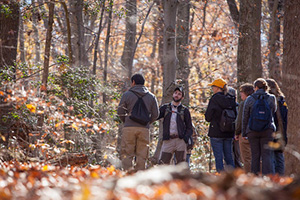
A transformative milestone came on August 7, 1986, when Virginia launched its Natural Heritage Program — the nation’s 43rd — dedicated to conserving the commonwealth’s rare plants, animals and natural communities. Since then, Natural Heritage scientists have discovered 64 species new to science and documented 441 species never before recorded in Virginia. The program manages the Natural Area Preserves System, created in 1989, which now protects 69 preserves totaling 66,700 acres. More than 20 preserves offer free public access.
The program is internationally recognized and has been honored three times as the outstanding Natural Heritage Program in the Western Hemisphere — acknowledgment of Virginia’s leadership in biodiversity conservation.
DCR’s water quality mission rapidly expanded in the 1980s. The Chesapeake Bay cleanup effort accelerated after the landmark 1983 Chesapeake Bay Agreement recognized the need for coordinated action across the region.
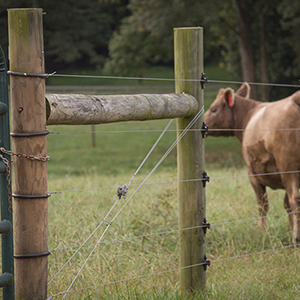
A year later, in 1984, Virginia launched the Agricultural Best Management Practices Cost Share Program (VACS), providing incentives for farmers to reduce runoff and protect waterways. Beginning with just 12 practices, the program has grown to more than 60 Best Management Practices (BMPs) and is now the largest state based agricultural cost share program in the nation, with record funding levels between 2022 and 2026.
In 1985, the Virginia Soil and Water Conservation Commission joined the state agency structure that evolved into today’s DCR Division of Soil and Water Conservation. Since then, DCR has worked closely with local conservation districts to reduce nonpoint source pollution across Virginia’s rivers, streams and bays.
Beginning in 1965, DCR became the state administrator of the federal Land and Water Conservation Fund (LWCF). Over nearly six decades, DCR has distributed more than $135 million in LWCF grants for over 400 projects, expanding parks, trails and outdoor recreation access statewide.
Trail Access Grant Project Before / After
That same year, Virginia produced the first Virginia Outdoors Plan, which continues today as the official statewide guide for conservation and recreation planning. The current plan (2025–2030) is an interactive digital resource featuring spatial mapping and data tools.
Surveys consistently show Virginians’ strong support for investing in outdoor recreation — an investment reflected in state funding, local partnerships, and ongoing planning for high quality facilities.
The commonwealth’s modern land conservation framework was established in 1966 through legislation that created the Open-Space Land Act, the Virginia Outdoors Foundation, and several other historic preservation structures.
Further milestones include:
Today, more than 4.33 million acres — 17.15% of Virginia’s land area — are permanently protected.
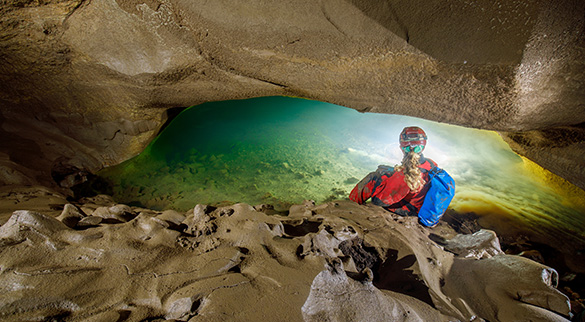
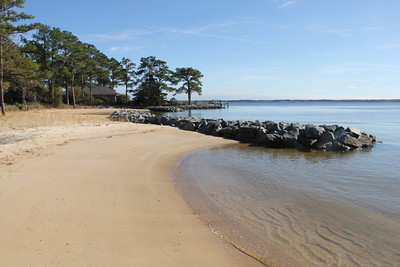
Following a series of devastating floods — from Hurricane Camille in 1969 through major flooding in the 1980s — the General Assembly transferred all flood related programs to DCR in 1987, and the 1989 Virginia Flood Damage Reduction Act made DCR responsible for statewide floodplain management.
Milestones in DCR’s resilience and flood protection work include:
Today, DCR envisions a Virginia where state-led solutions and local action reduce flood risk equitably and sustainably for all communities.
DCR’s first century has been defined by bold action — establishing a state park system, safeguarding biodiversity, restoring water quality, expanding public access, protecting millions of acres and confronting changing climate risks. Across all these programs, the agency’s hopes for the future reflect a commitment to:
As Virginia celebrates DCR’s 100th year, it honors the people, places, and partnerships that have shaped a century of conservation — and looks ahead to the next century of protecting what Virginians care about most.


